Chapter Fifteen, Part One

A serial journal of cogent reflections and irreverent insights on the social effects of capitalism and the roots of partisan politics.
Pairing prose with HDR photography and “flash points” drawn from current and historical perspectives,
the author seeks to recover lost wisdom and courageous action beyond the shouting and noise of today's headlines.
Chapter Fifteen Moving from Factions to the Whole: Paying Attention in New Ways Part 1: Psycho-Spiritual Perspectives Time Range: 1787-1789, Current Times

FLASH POINTS
"Among the numerous advantages promised by a well-constructed Union, none deserves to be more accurately developed than its tendency to break and control the violence of faction."
— James Madison, Federalist No. 10, November 23, 1787

"I never submitted the whole system of my opinions to the creed of any party of men … where I was capable of thinking for myself. Such an addiction is the last degradation of a free and moral agent. If I could go to heaven but with a party, I would not go there at all.
"
— Thomas Jefferson, letter to Francis Hopkinson, March 13, 1789 (source)

The Founding Fathers of the United States, like Madison and Jefferson, were deeply concerned with the tendency of groups to congeal into political factions and dictate solutions from their own factional viewpoint. With only a touch of irony, Jefferson’s statement, that he would decline an invitation to heaven if it meant going with a political party, should give us pause as we look out on our current landscape of political activity. However, it was not conflict they were avoiding, nor were they looking for simple forms of compromise among multiple distorted views. They were, in an uncompromising fashion, looking for productive angles by which the union could be preserved and intelligence awakened in the collective body. They were seeking to unravel a paradoxical riddle: How could creation of a central government be complementary with individual moral agency?
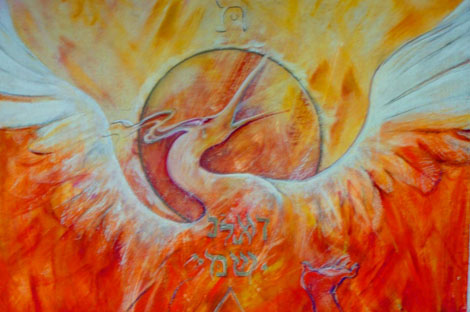
HDR (High Dynamic Range) Photography by Alan Briskin: multiple shots at different exposures are combined into one image in order to show "more of what's there"
We have never resolved that riddle, but a key element for these Founders was education of a kind in which individuals grew in their capacity for values such as personal reflection, respectful debate, and shared understanding. Similarly, in the research that led to our book, The Power of Collective Wisdom: And the Trap of Collective Folly, we discovered similar values and approaches that created the conditions for collective wisdom to arise. We called these ways of knowing psychological stances indicating attitudes and commitments that fostered reflective consciousness and discernment. Some of these stances included deep listening, suspending personal certainty, seeking diverse perspectives, and welcoming the unexpected.
Beyond any single stance, however, was encouragement to be curious, to ask questions, and to trust in the wisdom of the body, both personal and collective. We also pointed out that collective wisdom’s opposing tendency was false dualities created by forced agreements within a group or extreme polarization between groups. In other words, the same kinds of extreme factions that many of the Founding Fathers were so alarmed about and that still exist today.
Why? What is it about factions that creates such jeopardy for the collective body? Conversely, what is it about wholeness and viewing ourselves as part of a collective body that is so valuable? I offer three overlapping perspectives—psycho-spiritual, physiological, and social—that may shed light on these questions.
Psycho-spiritual perspective. By their nature, factions, separated from the concerns of the whole, take on radical self-interest. This self-interest is inherently a reductionist view of a larger reality. Psychologically, the limited perspective is captured in the mind for easy retrieval by a symbol, phrase, or fantasized ideal state. Over time, the symbol or ideal gains greater and greater power, further reducing the legitimacy of other viewpoints and limiting consideration of the complexity and ambiguity of actual circumstances. In other words, an obsession of sorts is constellated in the mind and in the group. This thought form, once constructed, can be highly contagious in groups because it offers structure and a reduction of complexity. Law and order is a perfect example of this kind of reductionist label, but so are ideas like liberty, freedom, and even human rights. These concepts all begin with some original meaning or orientation but devolve rapidly into factional interpretations.
If we are to truly consider what it means to move toward wholeness, we must grasp the psychological and spiritual nature of possession. Ideas can take us over, literally. Although our heads may not spin around on our shoulders like in the movie The Exorcist, the effect is somewhat similar when debating each other. We would rather die than give up on our opinion. Rather than dialogue moving us toward something in common, we only exacerbate the polarities among us. Idealized thought patterns become obsessive, mental activity becomes agitated under the cloak of reason, and reason becomes a tool to prove that one is right. Superficial compromise only covers over the rigidity and single-mindedness of the possession.
The neuroscientist Robert Burton calls it the feeling of knowing and wonders if we are creating a reward system for the brain that values being correct and feeling certain over “acquiring a thoughtful awareness of ambiguities, inconsistencies, and underlying paradoxes” (Robert Burton, M.D., On Being Certain: Believing You Are Right Even When You're Not).
The sobering news about factions is that moving toward wholeness cannot be accomplished through good intention, reason, or compromise—at least not initially. There are times when in polarized situations we must confront the limitations of the other point of view and address directly the potential or reality of dangerous consequences. This takes courage.
Conflict-resolution strategies, as valuable as they are, should not be mistaken for trying to find a false middle ground or become justification for avoiding conflict. Some degree of polarization and conflict is needed to flush out underlying causes, especially the strong psychological forces that underlie genuine conflict. By engaging consciously with the dualities that possess us, we use the very tension of the opposites to bring forth new awareness. We should not imagine, however, that engaging the conflict is the same as convincing the other side that they are wrong or winning them over to our solutions. This is not about personal confrontation or victory in debate. The spiritual focus is very clear in this regard. Resolving conflict cannot be about individual ego. Rather, we are seeking to bring forward a memory of wholeness, a memory that already exists in each of us.
The way to transcend the possessions that claim us is to engage the imagination and the heart as well as the mind. We are seeking to notice more, to arouse a yearning within us to move from a lesser perspective to a greater one. This is altogether different than simply selecting positions or choosing sides. How we do this is unique to each situation. In some cases, it may be through humor or through the innocence of a genuine question or by reminding others of the human consequences of certain actions. It may be by bringing forward the true complexity of a situation or the moral ambiguity of almost any charged circumstance. It may be by standing firm. It is often by listening and demonstrating to the other side that they are being heard.
However it is accomplished, the hope is that reason and moral agency can be awakened in both the individual and the collective group. We may not be able to sway those most strongly identified with a factional viewpoint, but the appeal is to the larger whole.
The call to something greater can be understood as a spiritual mandate, change necessary to bring balance to a human system gone awry. I use “spiritual” here to express the best of the human spirit, qualities such as kindness, intelligence, compassion, discernment, and justice. These qualities arise from a regard for wholeness, linked linguistically with the words healing and holy through the Old English word haelan. The movement from faction to whole is a journey of healing, reawakening what is best in us and putting a salve on old wounds.
Many years ago, in a personal correspondence, Peter Vaill, the pioneering theorist on organizational change, wrote to me about the relationship between spirit and large-scale change: “Several years ago when I was first trying to think systematically about spirituality, I realized that spiritual ideas hold promise for healing some of the deep divisions among people; and conversely, if we try to heal deep divisions while leaving soul and spirit out of this process, we will probably fail. Any agreement will be temporary and expedient only.” In Peter’s words, we see again that change is not solely on the outside or inside, but at the intersection of the two.
A spiritual mandate for change is not a new form of obsession, though it could be, but rather a re-acquaintance with our inherent connectedness with others. Sometimes this can create discomfort or even heighten differences, but as Martin Luther King demonstrated regarding civil rights or Mahatma Gandhi showed us when fighting for India’s independence, the spiritual context is not about the domination of others. It is about creating the conditions for our interconnectedness to be revealed and our old wounds healed. To do this requires not only intellectual insight or even emotional warmth, but the wisdom of the body.
NEXT WEEK: Moving from Factions to the Whole, PART II The movement from factions to wholeness includes the wisdom of the body. It may seem a leap, but being aware of our body is a direct experience of the movement from part to whole. By attending to breath, we slow down and cultivate presence. By being aware of our physical body, we bring into consciousness the wisdom of the throat, heart, and gut. The body does not lie.


Comments