Chapter Four, Part One

A serial journal of cogent reflections and irreverent insights on the social effects of capitalism and the roots of partisan politics.
Pairing prose with HDR photography and “flash points” drawn from current and historical perspectives,
the author seeks to recover lost wisdom and courageous action beyond the shouting and noise of today's headlines.
Chapter Four, Part One: Out of Depression and War, a New Vision of Wealth Distribution Time Range: 1929-1944, 2012
FLASH POINT Wall Street, October 1929
The Roaring Twenties collapsed amid a giant speculative bubble. The Dow Jones Industrial Average had increased fivefold over a six-year period, and there seemed no end in sight. As if in a giant craps game, players were left with their cash on the table. Who would have guessed? The wealth benefits of surplus value appeared to have no real counterforce, or so it seemed. Simultaneously, an investor class now began to understand that speculation about the future of profit could be more profitable than creating goods and services. It was this latter lesson that stuck even as a whole army of economists would be engaged to figure out how to avoid the next crash. Financial services, particularly the purchase and sale of commercial paper, would eventually become the new game in town, but not quite yet.
Freedom from Fear and Want: State of the Union, 1944In his final State of the Union speech at the end of his second term of office, President Franklin D. Roosevelt laid out his thoughts in a particularly blunt fashion. World War II was nearing an end but still far from a clear conclusion. He had to rally a country that had been through a desperate depression and still faced an uncertain future. In this speech, he laid out the clear connection between security and poverty. He declared: “And an equally basic essential to peace is a decent standard of living for all individual men and women and children in all nations. Freedom from fear is eternally linked with freedom from want.”
Yet he knew this was not a shared belief. He warned of the insanity of “the so-called ‘normalcy’ of the 1920’s” and went as far as to call those financial excesses “the spirit of Fascism here at home.” Acknowledging American sacrifice that had met the demands of war with courage and stood ready to make further contributions, he cautioned about a “noisy minority” demanding “special favors for special groups … who swarm through the lobbies of the Congress and the cocktail bars of Washington, representing these special groups as opposed to the basic interests of the nation as a whole.”
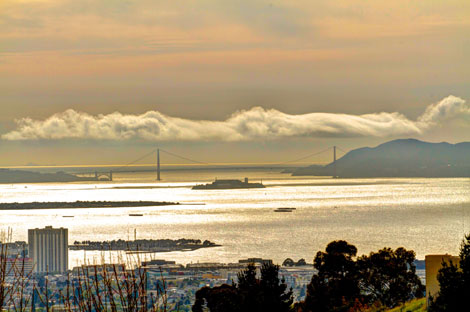
HDR (High Dynamic Range) Photography by Alan Briskin: multiple shots at different exposures are combined into one image in order to show "more of what's there".
Was Roosevelt feeling a little stressed out? No wonder his opposition suggested that he was a Socialist; he was making points remarkably similar to those of Marx at the Red Lion Pub. It was as if he were declaring the danger of lobbying groups shilling for owners of capital, congregating on an imaginary Das Kapital Street right in the heart of the nation’s capital. Could such a K Street ever exist? Would we allow it?
Corporations That Spent the Most on Lobbying Saw Tax Rates Decline: Report
“The top eight companies that spent the most on federal lobbying from 2007 to 2009 all saw their reported tax rates decrease from 2007 to 2010, according to a new analysis released Monday by the Sunlight Foundation.
“The report notes that these top eight firms spent $540 million on lobbying from 2007 to 2009. They filed 332 lobbying reports that mentioned taxes and named 491 different tax bills in those reports.
“The top eight companies that spent the most on lobbying were Exxon Mobil, Verizon Communications, General Electric, AT&T, Altria, Amgen, Northrop Grumman and Boeing. Exxon Mobil spent the most, some $81.92 million from 2007 to 2009.
“AT&T recorded the largest tax reduction, with its tax rate falling from 34.0 percent to negative 6.4 percent from 2007 to 2010, or an estimated reduction of more than $7.3 billion.”
— Huffington Post, April 17, 2012

Roosevelt understood that we were entering a period of increasing interdependence: “In this war, we have been compelled to learn how interdependent upon each other are all groups and sections of the population of America.” Not individuals, but groups. This is a critical distinction, meaning that subgroups of the whole must learn to work toward common purposes. We must, Roosevelt insisted, be concerned with groups made up of businesspeople and farmers but also teachers on pensions and soldiers returning from duty. We are all interconnected. A high standard of living that leaves behind significant subpopulations is a dangerous illusion. “We cannot be content,” he declared in one of the more famous lines from his speech, “no matter how high that general standard of living may be, if some fraction of our people — whether it be one-third or one-fifth or one-tenth — is ill-fed, ill-clothed, ill-housed, and insecure.”
Declaring the need for an economic bill of rights, he proclaimed that without them, individual rights of life and liberty would be compromised and our political bill of rights would be in jeopardy. Just as today we have, as a matter of national pride, a system of government that protects free speech, free press, free worship, trial by jury, freedom from unreasonable searches, and free elections, Roosevelt hoped that one day we could say the same about an economic bill of rights. What were some of these rights?
The right to useful and remunerative work
The right to earn enough to provide adequate food and clothing and recreation
The right of every family to a decent home
The right of adequate medical care
The right of adequate protection from the economic fears of old age, sickness, and unemployment
The right to a good education
During Roosevelt’s time in office, he oversaw the creation of the Social Security System, Securities and Exchange Commission (SEC), Federal Housing Administration (FHA), and Works Progress Administration (WPA), and the passage of the Wagner Act, which aided the promotion of unions. If Roosevelt sounded at all like Marx in his warnings, his actions could not have been more different. He believed in government’s right to act on behalf of those in need, rather than have those in need organizing together in revolt. Marx was far more cynical, if not realistic. He believed that governments would be lackeys catering to whichever class of owners currently held power. He predicted that governments would be socially incapable of reining in capitalism’s excesses.
Roosevelt believed otherwise. He thought government should be willing to be referees in the capitalist’s game of concentrating wealth in fewer and fewer hands. He believed it was essential on both moral grounds and in the name of democracy as a living, viable entity. For Roosevelt, political rights in the United States and around the world depended on freedom from want as well as fear. If political and economic rights diverged too greatly, he feared that terrorism, fundamentalism, and extremism of all forms would split the nation and the world. Was he just a worrier?
Next Week: Out of Depression and War, a New Vision of
Wealth Distribution, Part Two
The economic bill of rights highlighted a scar in the American psyche. Roosevelt’s time in office, which included a failed coup d’état directed against him, deepened the resolve of factions opposed to government intervention. From this moment on, a widening split would cleave those who believed in federal intervention from those who perceived arrogance in a government that addressed questions of economic distribution. Conservatives, as opposed to liberals, proclaimed that people had a right to own what they owned and government should be on a very short leash. Government intervention should be held to the strictest criteria for determining what benefited the nation as a whole, especially in regard to infringing on private property and wealth accumulation.


Comments